Tuesday, October 12, 2010

Finally : wild edible mushrooms in my backyard

I've been lamenting about the bounty of giant, dinner sized toxic mushrooms (Chlorophyllum molybdites ) springing up all over our neighbourhood after rain.

I've been wishing I could seed my yard with edible mushrooms instead, then I discovered to my amazement these giant white puff balls. I was a little hesitant and did a lot of research and finally without a shadow of a doubt identified these as the "The Giant Puffball", Calvatia gigantea.

I washed my first one carefully, then peeled the skin off to remove the black soil, then cut it into 1/2 inch thick "steaks", then fried them in butter with garlic and herbs.
 It was delightful. My wife said: "I'll see if you're still alive tomorrow, then I might consider tasting it". I fried mushrooms for myself a couple of times when she finally gave in and tried it, she loved it and so did the girls, now when I find a newly "hatched" puffball, we add it to whatever dish we're making, last time my wife added it to a delicious pasta dish, it made the dish creamy and very tasty.

Disclaimer: Please do not gather and eat any mushrooms unless you can be 100% sure they are non-toxic.

Protecting Meyer Lemons from birds : Update

Even though the foot socks didn't help to protect my pomegranates from the leaf footed bugs, they sure scared the birds away from my Meyer Lemons. Even though the lemons outgrew the socks - and they teared, it still kept the birds away.

We've been having as many lemons as we need, plus giving away some to all guests. The first crop is barely ripening and I see the tree starting to bloom again.

These lemons are delightful, not as sour as other lemons, cut them into wedges, salt them up and eat away !

Monday, October 4, 2010

Trust your first instincts


Indian Jujube

I really created a lot of work for myself by planting plants in spots I knew I shouldn't have.

I went to my favourite rare fruit nursery once, and wasn't sure what I wanted to buy, so I asked for a small tree with great tasting fruit. Well, I ended up buying an Indian Jujube tree. I walked around the yard and just couldn't find a spot that I wanted to give up for the jujube since I didn't know what it would taste like. I finally decided upon a spot next to my developing rock garden. I knew right there and then it wasn't the right spot but planted it nonetheless.

Turns out the tree is is not small  - its a very fast and aggressive grower, its has a scrawny habit and when the trunks are laden with fruit, they bend down, covering a very large area and makes it impossible to mow or weed underneath. The trunks are so long that when they sag down, they cover the rock garden too !

The other problem, no-one in my family likes the fruit, including myself.

The branches are also cover with nasty hooks that makes working around and with it nasty. This tree also seems to be one of the Sri Lanka weevil's favourite food plants.

Horse Radish
So I had to make a tough decision, should I keep the tree as it is rather pretty regardless of the bland tasting fruit and nasty thorns ? After thinking about it for months, I finally took the plunge. While I had my chain saw pruner attachment on my weed whacker, I decided to take it down and also chop down the horse radish tree (that I also knew I shouldn't have planted where I did).

Rock garden with stump of Jujube behind it
After all this hard work and money wasted I'm back to where I was before I planted these two trees. I've since learned that its better to give away plants that you don't want, than to plant them in the wrong spot and having to end up spending a lot of sweat and hard work to remove them later when they do become a problem.

Sunday, October 3, 2010

Read this before you plant that yellow passionfruit

Yellow Passionfruit vine eating up Travellers Palm
So you're thinking of planting a yellow passionfruit also known as lillikoi, or Passiflora edulis var flavicarpa ?

I already had so many different tropical fruits and despreately wanted a passionfruit. I read that the purple fruited variety is very susceptable to nematodes here in South Florida's sandy soil, so I found some Brazilian yellow round passionfruit seeds. Unlike the other passionfruit seeds I had bought, thse seeds readily germinated and grew very fast.

I found 8x4x4 solid cedar posts on sale at Home Depot, bought the wire, metal connectors and all the other hardware to construct my two wire trellis as all the books and online sources instructed, only this is not near enough to support a yellow passionfruit vine.

I planted 2 containers, I had two vines, the other one. Within one year, these three plants had covered the fence, grown into my neighbour's trees, covered the whole area in the picture to a heigth off about 3 feet, started smothering my travellers palm mango, litchi, fig, papaya tree, in short, anything within its grasp.

Feeling sorry for it and hoping for some delicious fruit, I left it to its own devices. I should have followed my first instincts and gotten rid of it sooner than later. It flowered on and off but never set a single fruit.

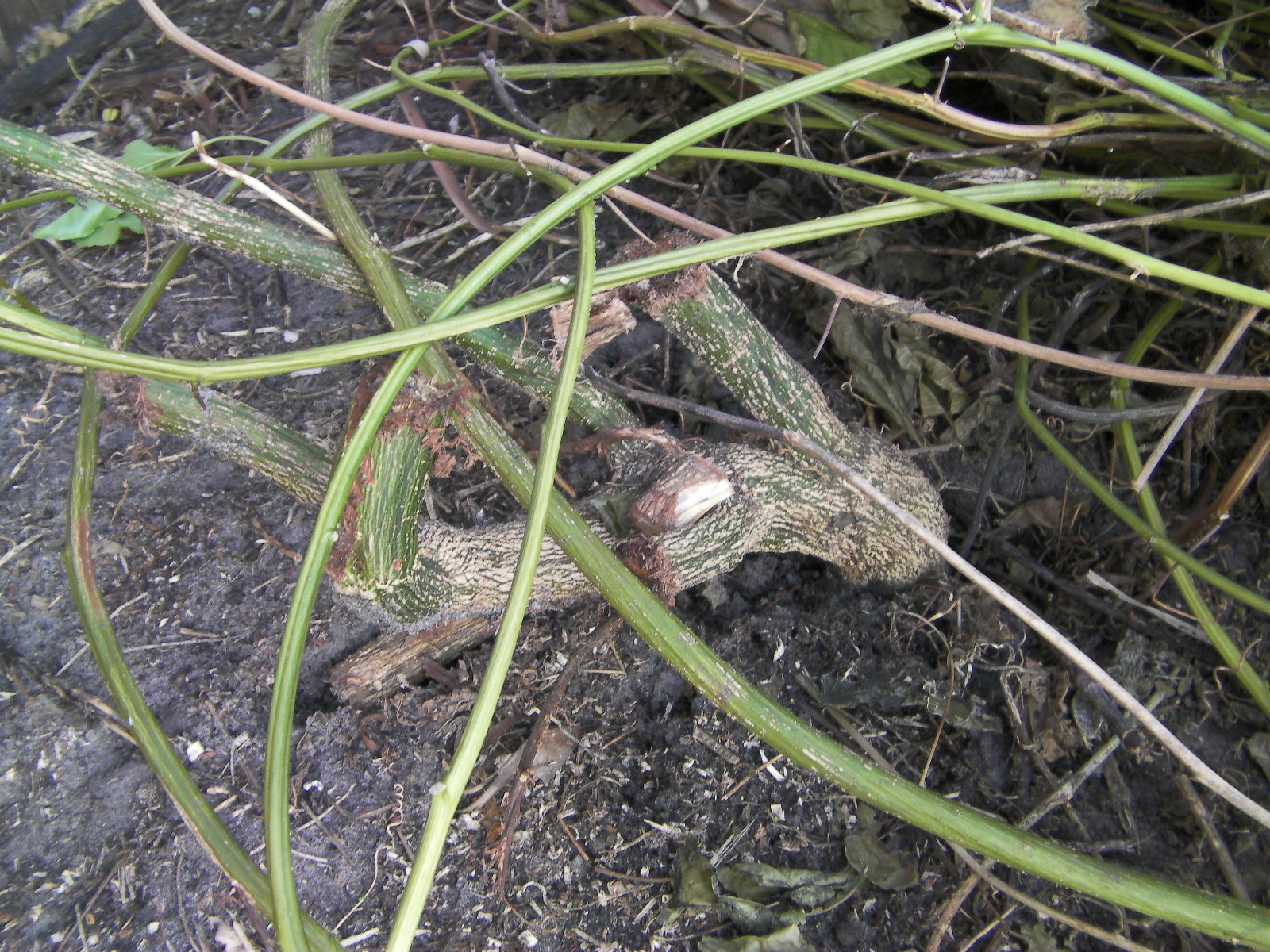
1 year old yellow passionfruit vine stem
4 weekends later and this area is now clear, was covered to top of fence, and rest up to 4 feet tall
Some of the dead vines heaped onto a pile
I spent the last 4 weekends getting rid of this invasive vine. Seriously, this is not something I wish on my worst enemy. To remove this vine was hell, it kept on looping aorund the head of the weed wacker and every few seconds I had to untangle it, I also used my pole pruner on it, it even  managed to get into the chain saw enclosure and brought everything to a halt and I constantly had to pull the vine out to get it going again. Today I had to cut the strands with a pruner in order to untangle it from the wires and clear the area. I will not plant another passionfruit here as long as I live here. Maybe not even the tamer purple variety.

The cedar posts rotted, so much for "rot resistant cedar", guess nothing can withstand the hot, humid and wet Florida summers.

8x4x4 cedar fence post after 1 year in ground
If you really must plant this vine, make sure you have enough space and please do yourself a favour and keep up with it. As soon as you see it grow into your other beloved plants or trees, cut off those tendrils and keep a close watch on it, before you know it, it will completely cover everything in its path.

Monday, September 6, 2010

Aloe thraskii crown rot

I've noticed lately that the growing tip of my beautiful Aloe thraskii looked wilted and started turning brown.

Upon closer inspection, the whole crown had rotted.

When I pulled on the litle leaves, the whole inside of the crown came out, all slimy and covered in maggots.

Its really disheartening when something you've been growing and caring for so long just rots like that. Its really surprising to me since these aloes grow right on the beach in South Africa, where they get salty spray and lots of rain.

I started reading up on it and found quite a few other people complaining about crow rot with the thraskii's. Some say to leave them and it might come back, albeit with a strange looking double crown which is out of character for a thraskii as they are solitary single trunked aloes.

At least one plant thats happy and trouble free

This is Carissa macrocarpa, a beatiful thorny shrub from my native South Africa.

I grew it from a little seed bought online. Its been a little over three years and its now reached a stage where its almost constantly in bloom and really pretty.

I ate the first fruit off it last week, it tasted a little like a cranberry but it wasn't enough to really get a good feel for it.

I planted it off the beaten track, away from where the kids run and play, I knew it could grow quite large, so I planted it in a secluded spot, almost against the North facing wall, so in winter it doesn't get full sunlight, but even so its been very happy in its spot. Its also hiding my work area where I store my little greenhouse, empty plant containers etc.

I really enjoy walking past it and smelling the sweet jasmine-like fragrance and seeing the white flowers against the glossy green leaves. In all the years we visited the ocean every summer back home, I never paid any attention to this shrub growing right on the beach with its pretty red berries, didn't even know it was edible.

Lillikoi halfway tamed

Last weekend I got up early with determination to get rid of the lillikoi passionfruit vine.

Of course there was a problem, the little metal part that connects the string trimmer head to the motor was missing, so after searching for a while, sweating in the heat of the garage and humidity, I was finally ready to start tackling it.

It took almost three hours to hack away half of it. What makes it really tough is the fact that the touch vine keeps on wrapping around the head of the string trimmer, basically bringing it to a half, then I have to stop, and try to wrangle the vine away and off. The electric cord was just too short off course and I couldn't reach further. By then I looked like a green martian, covered in pieces of passion fruit leaf, vine, weeds and who knows what else. By then I had also stopped sweating and was starting to feel overheated.

The brown area is where I've whacked the 3 feet high vine away.
It is just so hot and humid right now, that just walking outside for a couple of minutes is enough to be drenched  in sweat. I know I shouldn't leave the rest too long, otherwise I'll be back to square one, but for now, I am just hoping and praying that at least the humidity will give a little way, or I could start early enough to beat the intense heat, or it could be overcast and just a little cooler.
The other half that still needs to be wacked